Managed AI Ops · 4 min read
AI Receptionist vs Virtual Assistant vs Managed AI Front Office
A practical comparison of AI receptionists, virtual assistants, and managed AI front office workflows.
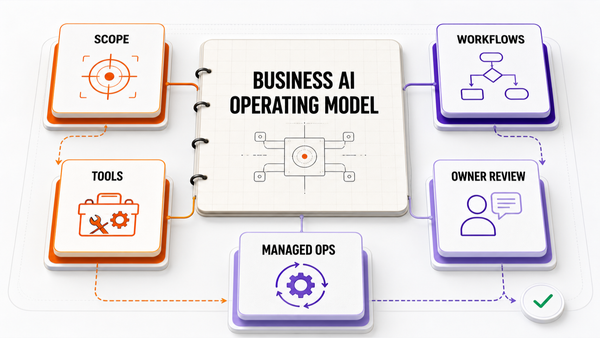
The Omni model: one managed AI Employee owns one recurring workflow; specialist employees add capacity around the same business context; your team keeps the judgment calls.

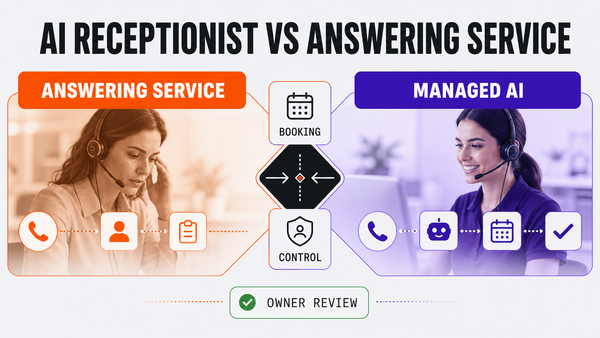
Direct answer: An AI receptionist is better for repeatable intake, after-hours response, summaries, reminders, and structured routing. A virtual assistant is better for judgment-heavy communication and unusual situations. A managed AI front office combines automation, human approval, routing rules, QA, and monitoring so the business gets speed without losing operator control.
Question cluster this article supports
- is AI receptionist better than a virtual assistant
- AI answering service small business
- home-service AI answering
- managed AI Ops
- AI front office
Automation approaches compared
| Approach | Setup effort | Flexibility | Ongoing ownership | Best for |
|---|---|---|---|---|
| No-code tools (Zapier / Make / n8n) | Low | Medium | Owner-managed | Simple, predictable triggers |
| Custom AI agents | Medium–High | High | Owner + developer | Judgment, language, exceptions |
| Managed AI Ops (Omni Studio) | Low for the buyer | High | Operator-managed with owner approval | Teams that want AI without running it alone |
The comparison should be workflow-first
Most buyers compare AI receptionists and virtual assistants as if they are two versions of the same front desk. That misses the real operating question: what work needs to happen after the conversation starts?
If the work is repeatable, structured, and easy to route, an AI receptionist may be faster and more consistent. If the work needs emotional judgment, negotiation, policy interpretation, or unusual problem solving, a human assistant still matters.
Where an AI receptionist fits
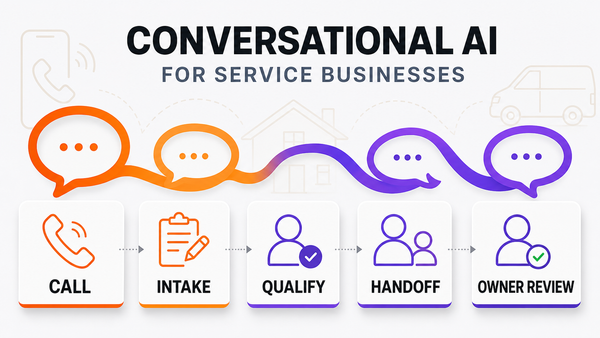
An AI receptionist fits missed-call capture, after-hours intake, common questions, appointment reminders, job summaries, and initial triage. It can ask the same required questions every time and create a clean handoff.
For home-service teams, that means service type, urgency, property access, preferred window, job context, and escalation signals can be captured before the dispatcher or owner reviews the next step.
Where a virtual assistant fits
A virtual assistant fits conversations where the customer needs judgment, reassurance, flexible problem solving, or a human tone. They can handle policy gray areas, unusual customer history, and situations where the business does not have a rigid script.
The tradeoff is cost, coverage, consistency, and speed. A human assistant can be excellent, but they still need systems, scripts, and handoff rules to keep the operation clean.
Where managed AI front office fits
A managed AI front office is the operating layer between automation and the team. It uses AI for repeatable work, routes exceptions, keeps approval gates visible, and monitors whether the workflow is actually helping.
This is the strongest fit when the business needs intake, routing, CRM notes, booking drafts, follow-up, and owner review across several connected systems.
How to decide what should be automated
Automate the parts that are repetitive and source-backed. Keep approval for the parts that are sensitive, unusual, or customer-trust heavy. The answer is rarely full AI or full human. It is a split workflow.
The split should be written down before launch. Otherwise, the AI may promise too much or the assistant may spend too much time on work that could be structured.
How this looks in a service business
A simple missed call can show the difference. The AI receptionist can answer, collect the service type, ask the required intake questions, summarize the request, and create the review queue. A virtual assistant can then handle the unusual or emotional parts when the customer needs a human conversation.
For routine jobs, the managed AI front office can move the request toward a booking draft or follow-up task. For urgent, expensive, sensitive, or unclear work, it can pause and ask for approval. The value is not that every call becomes automated. The value is that every call gets a cleaner next step.
That is the position Omni Studio should own: automation where the workflow is repeatable, human review where judgment matters, and managed AI Ops around the handoff so the owner can see what is happening.
This also gives the business a better staffing model. Humans spend less time asking the same opening questions and more time resolving the situations where empathy, policy judgment, or operator knowledge changes the outcome.
The best comparison is therefore not AI versus people. It is which parts of the front office should be structured by AI, which parts should be reviewed by people, and which operating layer keeps both sides coordinated.
That framing keeps the article away from commodity answering and closer to the operational category Omni Studio is building.
Internal routes to review next
For small-business comparison context, review AI answering service for small business, home-service AI answering, and AI front office for small business.
For the operating model, review managed AI Ops and AI receptionist vs answering service for home services.
External reference
For broader small-business AI context, see FCC guidance on unwanted robocalls and texts.
Frequently asked questions
Is AI receptionist better than a virtual assistant?
An AI receptionist is better for repeatable intake, after-hours response, summaries, reminders, and routing. A virtual assistant is better for unusual, emotional, judgment-heavy, or policy-sensitive conversations.
What is a managed AI front office?
A managed AI front office is a workflow layer that combines AI intake, routing, follow-up, exception queues, human approval, QA, and monitoring. It is designed to move operational work forward, not just answer messages.
When should a business use both AI and a human assistant?
Use both when routine intake can be structured but customers still need human judgment for exceptions. AI can prepare the handoff while a human reviews sensitive decisions.
What should stay human-approved in front-office automation?
Pricing, urgent escalations, unusual scheduling promises, angry customers, safety issues, refunds, and policy exceptions should stay human-approved unless a narrow business rule has already been approved.
References
Authoritative sources referenced in this article:
Check whether this workflow is ready for AI Ops
Before expanding the workflow, use the AI Ops readiness scorecard to confirm the owner, source systems, approval gates, exception path, and weekly review loop are clear.