Managed AI Ops · 1 min read
AI Receptionist vs Answering Service for Home Services: Cost, Booking, and Control
A practical comparison for home-service owners deciding between a traditional answering service and a managed AI receptionist with booking, CRM logging, approval gates, and QA.
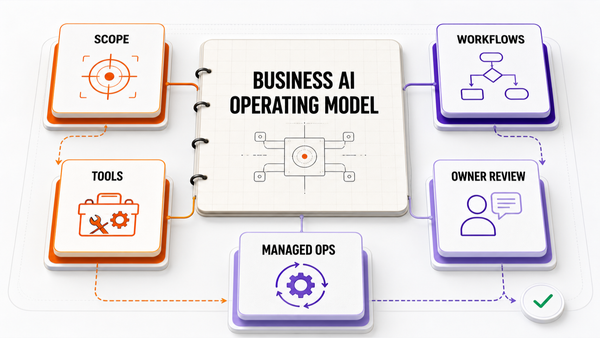
The Omni model: one managed AI Employee owns one recurring workflow; specialist employees add capacity around the same business context; your team keeps the judgment calls.

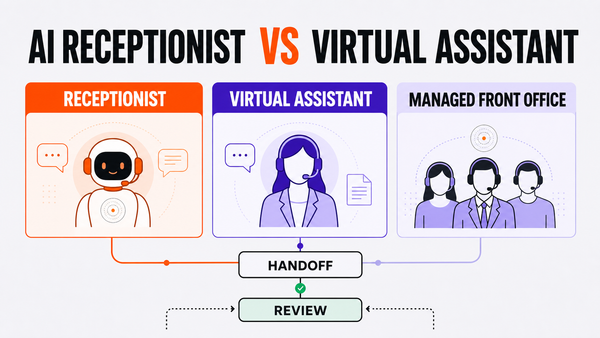
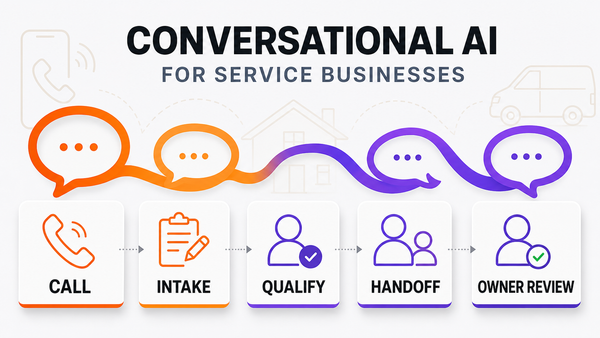
 Direct answer: For home-service businesses, an answering service is useful when you need humans to take messages and cover phones. A managed AI receptionist is stronger when you need calls converted into structured bookings, CRM logs, approval-gated dispatch notes, after-hours triage, and QA. The right choice is not AI versus people. It is whether the reception workflow needs simple coverage or operational control.
The real comparison is control
Most home-service owners do not lose jobs because nobody can say hello. They lose jobs when the call is captured but the next step is unclear: no booking window, no service-area check, no CRM record, no owner, and no approval path for sensitive promises.
A traditional answering service can be a good phone-coverage layer. A managed AI receptionist can become a workflow layer when it is configured to collect the right information, draft the next action, and route anything risky to a human before it reaches the customer.
Answering service vs managed AI reception
| Decision area | Answering service | Managed AI reception |
|---|---|---|
| Cost model | Usually priced around coverage, agents, calls, or minutes. | Should be judged by workflow value: captured demand, booked work, cleaner records, and fewer manual follow-ups. |
References
Authoritative sources referenced in this article: