Managed AI Ops · 1 min read
AI Receptionist Pricing for Home Services: Per-Minute Answering vs Managed AI Operations
A practical buyer guide for home-service owners comparing raw AI answering costs against managed AI operations, approval gates, integrations, QA, and revenue control.
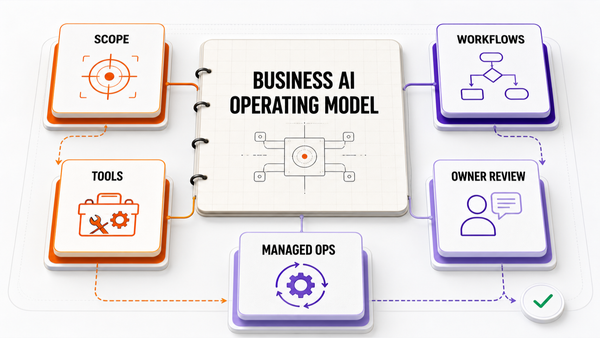
The Omni model: one managed AI Employee owns one recurring workflow; specialist employees add capacity around the same business context; your team keeps the judgment calls.

 Direct answer: AI receptionist pricing for home services should be compared on two axes: raw answering cost and operational control. Per-minute or per-call plans may cover simple overflow calls, but managed AI operations becomes more valuable when the system needs trade-specific intake, CRM logging, booking drafts, after-hours routing, human approval, QA review, and continuous improvement.
Pricing is not just a minutes problem
The cheapest plan can become expensive if it captures calls poorly, creates messy records, misses after-hours urgency, or books work that the office has to unwind. The right comparison is not "which AI voice bot is cheapest?" It is "which operating model captures revenue without creating cleanup work?"
For home-service owners, pricing should be judged against missed-call recovery, booked-job quality, office time saved, lead source visibility, customer promise safety, and whether the workflow improves after launch.
The five pricing models owners will see
| Pricing model | What you are buying | Best fit |
|---|---|---|
| Per-minute | You pay based on call duration or included minutes. | Simple overflow coverage with unpredictable call length. |
| Per-call | You pay based on handled conversations. | Teams that want cost tied to call count instead of talk time. |
References
Authoritative sources referenced in this article: