Field Service & Back Office AI · 2 min read
HVAC After-Hours Call Answering AI: How to Capture Calls Without Losing Dispatcher Control
A practical guide for HVAC owners evaluating after-hours call answering AI: what AI can capture, what dispatch should approve, and what must stay monitored.
The Omni model: one managed AI Employee owns one recurring workflow; specialist employees add capacity around the same business context; your team keeps the judgment calls.

Direct answer: HVAC after-hours call answering AI is useful when it captures missed calls, identifies no-cool/no-heat emergencies, drafts booking notes, logs call details, and routes exceptions to dispatch without making uncontrolled promises. The safe setup is not "AI books every job." The safe setup is AI intake plus dispatcher or owner approval for arrival windows, pricing language, service-area exceptions, and urgent technician routing.

What HVAC calls need the agent to understand
HVAC call handling is not generic receptionist work. A useful system needs to know the difference between no cooling, no heat, tune-up requests, warranty callbacks, filter questions, commercial service requests, maintenance-plan questions, and outside-service-area calls. It should capture the equipment type when available, the customer address, urgency, property type, preferred window, and whether the issue creates a safety or comfort escalation.
The first job is accurate intake. If the AI cannot ask the right trade-specific questions, the downstream booking and dispatch step gets messy.
Why after-hours HVAC calls are different
After-hours HVAC callers are often deciding fast. A homeowner with no cooling in a heat wave or no heat in a cold snap may call the next contractor if the first shop only takes a message. AI can help the business respond quickly, but it still needs the shop's on-call rules, service-area boundaries, emergency definitions, and approval ladder.
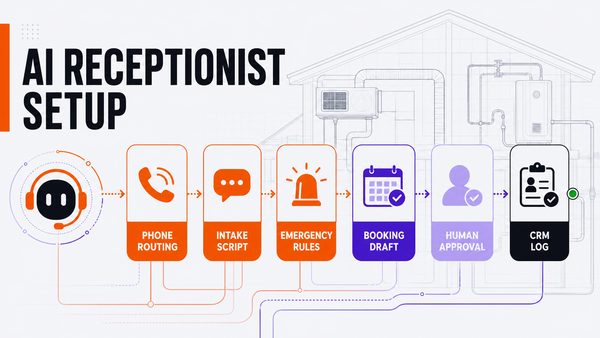
The safe workflow: answer, classify, draft, approve, log
| Step | What AI can do | Human gate |
|---|---|---|
| Call capture | Answer overflow or after-hours calls, record transcript, and collect customer details. | None for low-risk intake. |
| HVAC triage | Classify no-cool, no-heat, routine maintenance, quote request, warranty, or commercial call. | Dispatcher approvals edge cases and urgent calls. |
| Booking draft |
References
Authoritative sources referenced in this article: