AI Implementation · 5 min read
What Business Problems Can AI Solve for Service Businesses?
A service-operator guide to the business problems AI can solve and the decisions that still need human review.
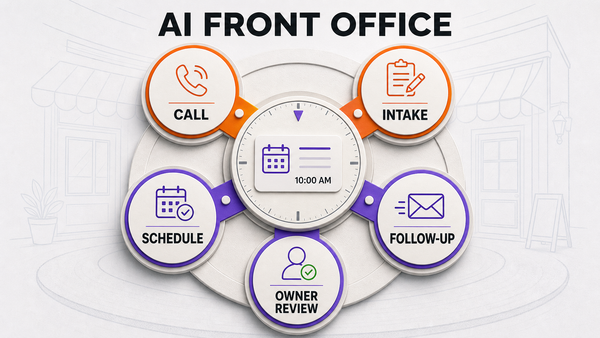
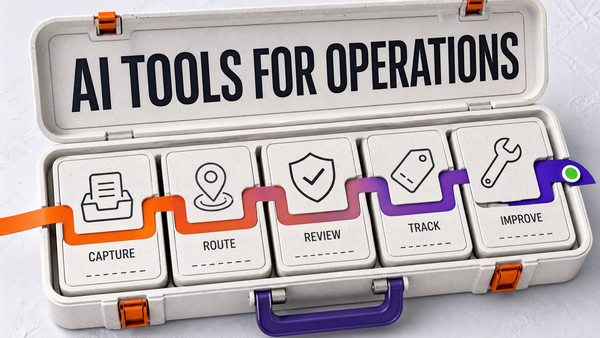
The Omni model: one managed AI Employee owns one recurring workflow; specialist employees add capacity around the same business context; your team keeps the judgment calls.

Direct answer: AI can solve business problems that are repetitive, source-backed, and easy to review: messy intake, slow follow-up, missed calls, duplicate notes, routing delays, reporting gaps, and status-update work. It should not be treated as a replacement for business judgment. The safest path is to audit the workflow first, then automate the parts with clear rules.
Question cluster this article supports
- what business problems can AI solve
- AI automation audit
- AI agent implementation partner
- managed AI Ops
- workflow automation
AI operating models for a service business compared
| Model | Effort | Control | Ongoing ops | Best for |
|---|---|---|---|---|
| DIY with off-the-shelf tools | High | Full | Owner-run | Technical owners with time |
| Agency build, then hand off | Medium | High at build | Owner-run after launch | One-time projects |
| Managed AI Ops (Omni Studio) | Low for buyer | Approval-gated | Operator-run with owner sign-off | Owners who want outcomes, not tooling |
The best AI problems are operationally boring
AI is most useful when it removes friction from work that already happens every day. Service businesses usually feel that friction in intake, dispatch, CRM notes, missed-call recovery, estimates, invoice follow-up, and status checks.
These are not glamorous use cases, but they matter because they sit between demand and revenue. If a lead is captured poorly or routed late, the rest of the operation starts behind.
Problems AI can usually solve well
AI can collect structured details from callers, classify request type, summarize job context, draft follow-up, detect missing fields, create internal tasks, and surface exceptions for review. It can also help staff find repeated questions and handoff patterns that slow the team down.
The common thread is that the AI is working from a defined source and a defined next step. It is not guessing the business policy or inventing a promise that the operator has not approved.
Problems AI should not own alone
AI should not fully own price exceptions, safety-sensitive decisions, angry customers, warranty disputes, payment issues, legal-sensitive language, or unusual scheduling promises. Those moments can still be prepared by AI, but they need approval gates.
The right implementation partner should help the operator draw those boundaries before launch. That is part of the work, not an afterthought.
Why an automation audit comes before the build
An AI automation audit finds where the workflow is clear enough to automate and where it is still too ambiguous. It maps source systems, data fields, allowed actions, approval steps, and failure points before a tool is chosen.
That prevents the common mistake of buying a tool and then forcing messy operations into it. The audit tells the business what to automate, what to route, and what to leave human-approved.
How managed AI Ops keeps the solution working
After launch, the work shifts from setup to operations. Managed AI Ops monitors failures, reviews transcripts or logs, improves routing rules, and watches the places where customers or staff are still confused.
That operating layer is what keeps AI from becoming a one-time project. The system has to learn from real workflow evidence, not just a clean demo.
How to rank the problem list
A service business should rank AI opportunities by frequency, business impact, data clarity, and review risk. Frequent low-risk workflows such as reminders, summaries, and missing-field checks often make better first projects than rare edge cases with high judgment requirements.
The ranking should also include the handoff cost. If staff spend time copying notes between systems, checking whether a lead has enough detail, or asking the same follow-up question after every call, that is a strong signal for AI-assisted workflow design.
Once the first problem is chosen, the business should define what good looks like in plain operating terms: fewer missed details, faster routing, fewer manual corrections, clearer owner review, or better visibility into work that is stuck.
That clarity also helps the team say no. If a workflow has no reliable source, no owner, no clean next step, or too much judgment, it should stay manual until the business rules are better defined.
The first win should create operational evidence. If the workflow improves intake quality or reduces staff rework, the team can use that evidence to choose the next automation lane instead of guessing from a tool demo.
Internal routes to review next
Use the AI automation audit when the problem list is still unclear. If the workflow will touch customers, calendars, CRM, billing, or dispatch, review the AI agent implementation partner route.
For post-launch ownership, review managed AI Ops and the comparison guide AI automation company vs managed AI Ops.
External reference
For broader small-business AI context, see NIST AI Risk Management Framework.
Frequently asked questions
What business problems can AI solve?
AI can solve repeatable workflow problems such as missed-call capture, intake cleanup, routing, summaries, follow-up, reporting, reminders, and exception surfacing. It works best when the source data and allowed actions are clear.
What business problems should AI not solve alone?
AI should not make final decisions on pricing, safety, legal-sensitive communication, refund disputes, unusual scheduling promises, or angry customers without approval. Those workflows need human review.
Why should a service business start with an AI automation audit?
An audit shows which workflows are repeatable enough to automate and which ones still need policy, data, or approval design. It prevents the business from launching a tool before the operating rules are ready.
When should I hire an AI implementation partner?
Hire an implementation partner when AI will touch customers, CRM, calendars, billing, dispatch, approvals, or multiple systems. Those workflows need design, testing, monitoring, and clear rollback paths.
References
Authoritative sources referenced in this article:
Check whether this workflow is ready for AI Ops
Before expanding the workflow, use the AI Ops readiness scorecard to confirm the owner, source systems, approval gates, exception path, and weekly review loop are clear.
How this guide was reviewed
This guide was built for small-business and service operators comparing managed AI Ops, AI front-office workflows, and approval-gated automation. It was reviewed against Omni Studio's implementation model: one workflow owner, clear source systems, human approval for risky actions, and a weekly improvement loop.
Last reviewed: July 2026. Reviewed by: Omni Studio operator research and implementation workflow.