Shopify & Ecommerce AI · 6 min read

Shopify AI Automation Checklist For Operators

Shopify AI Automation Checklist For Operators: learn the workflow, approval gates, implementation roadmap, and next step for business owners evaluating Omni Studio.

OS By Omni Studio · 03 Jun 2026
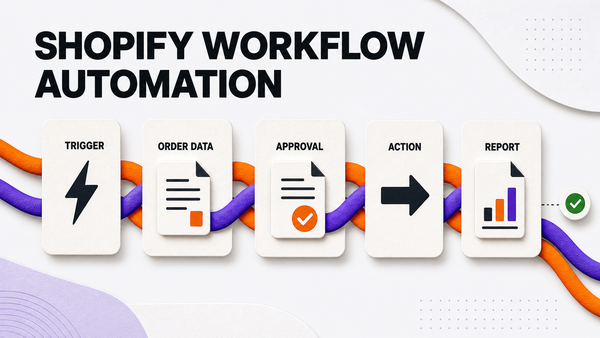
Omni Studio operator control-plane visual for Shopify AI Automation Checklist For Operators.

Direct answer: A Shopify AI automation checklist should start with one workflow, confirm the source of truth, decide what AI can draft, define human approval gates, test edge cases, and monitor results before expanding to public-store or customer-impacting actions.

This page is written for business owners and operators who are deciding whether to buy implementation help, not for people casually reading AI news. The core question is whether a workflow can be made safer, faster, and easier to operate with clear source systems, permission boundaries, human review, and post-launch ownership.

Why This Keyword Closes

Shopify operators have many tempting automation targets: product data, support triage, inventory risk, campaign prep, reporting, and fulfillment exceptions. The danger is automating too much too quickly and letting AI touch public or customer-facing surfaces before approval rules are clear.

A buyer searching for automate Shopify operations is usually past curiosity. They are looking for someone to translate AI into working operations. That means the page should not over-sell autonomy. It should show judgment, implementation discipline, review gates, and a clear next step.

Best Fit / Not A Fit

Decision What it means
Best fit Stores with repeated product, support, inventory, or reporting workflows that are slowing the operator down.
Not a fit Stores trying to automate claims, pricing, public copy, or customer replies without review criteria.
Buying signal The operator asks what Shopify workflow should be automated first or how to connect Shopify work to other tools.

Operator Workflow Table

Layer Input AI role Human approval Proof
Product data Product records and policies Draft improvements and missing fields Human approves facts and claims Before/after note
Support triage Tickets and order context Summarize and route Human approves sensitive replies Case log
Inventory risk Stock and campaign context Create risk queue Owner confirms action Daily exception list
Reporting Store and ops metrics Draft weekly summary Owner validates interpretation Operator brief

Approval Gates Before Anything Goes Live

Omni should use a permission ladder before allowing AI into sensitive workflows: read-only context, draft-only output, recommend-and-route, execute with human approval, and never-execute. The more public, financial, legal, or customer-impacting the action is, the closer it should stay to explicit human review.

Good implementation partners do not treat approval as a blocker. Approval queues reveal where instructions are unclear, source data is stale, or the workflow is not ready for more autonomy. Those corrections become the next improvement cycle.

Implementation Roadmap

  1. Pick one workflow. Start with a repeated operational pain, not a vague AI mandate.
  2. Map the source of truth. Identify which docs, records, dashboards, or systems the workflow can trust.
  3. Define permissions. Decide what AI can read, draft, recommend, route, execute with approval, or never touch.
  4. Build eval examples. Collect known-good, known-bad, and edge-case examples before launch.
  5. Launch draft-first. Keep high-impact outputs in review until the system earns trust.
  6. Monitor and improve. Review rejects, failures, missing context, and recurring exceptions weekly.

Failure Modes To Avoid

The first failure mode is automating before the workflow is understood. The second is connecting too many tools too quickly. The third is skipping evals and then having no way to tell whether quality is improving. The fourth is letting public, financial, or customer-facing actions escape review before trust is earned. The fifth is leaving ownership unclear after launch.

The safest buying path is a scoped audit, a controlled implementation sprint, and an operations loop that keeps the workflow improving. That is the revenue path Omni should make visible on every page.

How To Measure If It Is Working

Useful measures include accepted drafts, rejected drafts, missing-context incidents, failed tool calls, approval latency, recurring exceptions, source freshness, workflow cycle time, and owner confidence. These are stronger signals than a demo that works once on clean inputs.

What The Buyer Should Bring To The First Call

A serious first call should not begin with "show me all the AI tools." It should begin with business context. The buyer should bring one workflow that is slow, repetitive, risky, or expensive; examples of recent work; the systems involved; the owner of the process; and a clear sense of what cannot go wrong. That gives the implementation partner enough truth to separate a real opportunity from a shiny distraction.

The best inputs are practical: five recent tickets, five invoices, five product records, five call summaries, five support replies, or five reports the team already creates manually. Real examples expose the edge cases that generic prompts miss. They also make it possible to build evals before the workflow touches live operations.

What Omni Should Promise And What It Should Not Promise

Omni can promise a disciplined process: workflow mapping, source review, permissions, draft-first implementation, evaluation examples, monitoring, and an improvement loop. Omni should not promise guaranteed savings, instant revenue, fully autonomous replacement of a team, or perfect outputs. Business owners trust service providers who know where the risk lives.

The strongest sales posture is calm and specific. Show the operator how the first workflow will be scoped, what AI will and will not do, who approves sensitive steps, and how success will be reviewed. That is more persuasive than broad AI hype because it answers the buyer's real fear: "Will this actually work in my business without creating chaos?"

Why The Commercial Path Starts With An Audit

The right first commercial step is an audit because AI implementation quality depends on the workflow, the source systems, the review rules, and the team that will operate the result. A generic quote before this work is usually fiction. The audit should identify the highest-value workflow, the systems involved, the permission boundary, the first eval set, the risks, and the implementation order.

After the audit, the implementation sprint should build one controlled workflow rather than a sprawling AI transformation. The sprint should end with a working draft or approval-gated system, documented assumptions, and a monitoring plan. The retainer should then own iteration: reviewing failures, adding examples, tuning prompts, adjusting tools, and expanding only when the current workflow is stable.

This matters for sales because the buyer is not only buying code or prompts. They are buying confidence that someone can turn operational mess into a managed lane. That confidence is what converts a reader into an audit, an audit into a sprint, and a sprint into managed AI Ops.

What A Managed Retainer Should Actually Do

A serious retainer is not passive support. It should review workflow health, investigate failures, update evals, improve prompts and tool instructions, watch cost and latency, refresh source material, and propose the next workflow only when the current one is stable. The buyer should know what gets reviewed weekly, what gets reviewed monthly, and what requires immediate escalation.

This makes the service easier to buy because the owner can see the operating cadence. They are not paying for vague access to an AI expert. They are paying for a repeatable system that keeps the workflow useful after the initial excitement wears off.

Source Notes

This page is informed by current public documentation and market language around AI agents, ecommerce AI assistance, workflow automation, agent tools, and managed AI operations.

Related Omni Reading

Next Step

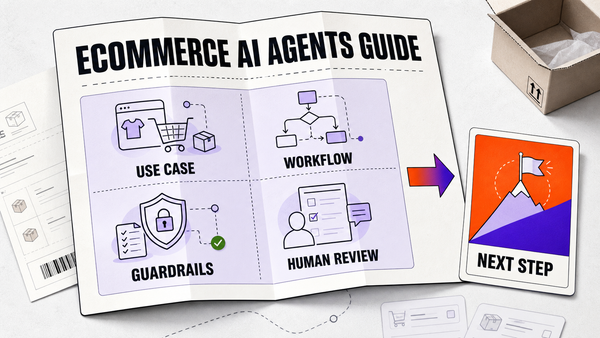
Get the Shopify ops checklist. Start with one workflow, define what AI can safely do, and turn the first build into a monitored operating lane rather than a loose experiment.

FAQ

What Shopify workflow should AI automate first?

Start with a repeated workflow that has clear inputs and low public risk, such as product data cleanup, support triage, inventory-risk summaries, or weekly reporting.

Should AI publish Shopify changes automatically?

Not at first. Public product copy, price, policy, discount, and customer-facing changes should begin as drafts for human approval.

How do Shopify-native AI tools fit with a managed workflow?

Native tools can help inside Shopify. A managed workflow helps when the work crosses support, inventory, reporting, marketing, and approval queues.

OS
Omni Studio