Reliability & Guardrails · 7 min read

Are AI Agents Reliable Enough for Business Operations?

Learn when AI agents are reliable enough for business operations and what approval, eval, logging, monitoring, and rollback layers are required.

OS By Omni Studio · 03 Jun 2026
Omni Studio operator control-plane visual for Are AI Agents Reliable Enough for Business Operations?.

Direct answer: AI agents are reliable enough for business operations only when the workflow is narrow, tested, logged, approval-gated, monitored, and reversible. They are not automatically reliable just because a demo works once.

This article is written for operators who are evaluating AI as an operating system, not as a one-off demo. The useful test is whether the workflow can be scoped, sourced, approved, monitored, and improved without creating new risk for customers, revenue, or public-facing work.

What Operators Actually Need To Decide

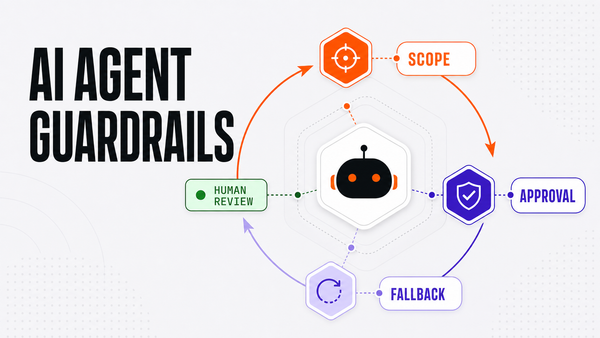
The reliability problem is not just whether the model gives a good answer. Production workflows include missing context, conflicting records, tool failures, delays, permission errors, customer sensitivity, and edge cases. A reliable agent setup has to define scope, test examples, fallback behavior, escalation rules, and a human owner before the workflow touches high-impact actions.

For AEO and buyer-intent search, the page needs to answer the question directly, show the decision framework, and make the tradeoffs visible. That is also how the workflow should be bought: define the job, define the source of truth, define what AI is allowed to do, and define who approves the result.

Where This Fits In The Current Tool Landscape

Modern automation tools are moving toward agents, but the operating model still matters. Official platform documentation now commonly describes AI agents or assistants in terms of instructions, connected tools, knowledge, workflow automation, and review. The implication for a small business is simple: the tool can be powerful, but the workflow still needs ownership.

Layer What it handles Operator takeaway
Demo reliability Works on a clean example with known inputs. Not enough for business operations because production inputs are messier.
Workflow reliability Works across expected examples, known edge cases, and failure paths. Useful when evals, logs, and fallback behavior are visible.
Operational reliability Has an owner, review cadence, rollback plan, and improvement loop. Required when AI affects customers, revenue, public content, or internal accountability.

Operator Examples

Reliable enough

Summarizing tickets, preparing internal notes, routing tasks, drafting replies, or creating review queues can be reliable when the source data and approval rules are clear.

Not reliable enough yet

Refunds, billing changes, public publishing, legal language, policy exceptions, and irreversible customer changes should not begin as uncontrolled autonomous actions.

Operational reliability

The business needs to see what the agent did, what tool it called, what it could not resolve, and when a human stepped in.

The Approval-Gated Operating Model

A safe first implementation does not start by giving an agent unlimited control. It starts by separating lower-risk support work from high-impact actions. Reading, summarizing, drafting, routing, and preparing are different from sending, publishing, refunding, repricing, deleting, or changing customer-facing commitments.

The practical permission ladder is:

  • Read-only context
  • Draft-only output
  • Recommend and route
  • Execute with human approval
  • Never execute

That ladder gives the business room to learn where the system is reliable before expanding what it can do. It also gives managers a way to evaluate progress with actual rejected drafts, corrected outputs, missed context, and recurring edge cases rather than vibes.

Controls That Should Exist Before Launch

  • Narrow scope
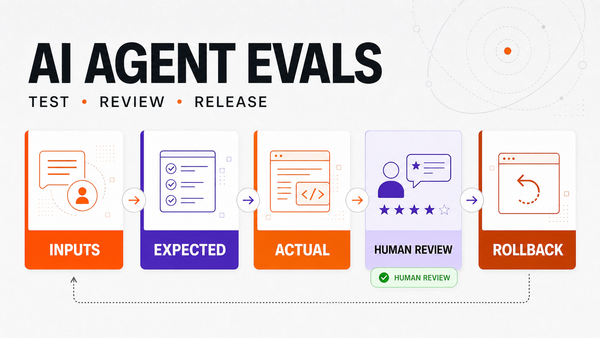
  • Test cases and evals
  • Trace logs
  • Exception queue
  • Human approval for high-risk actions
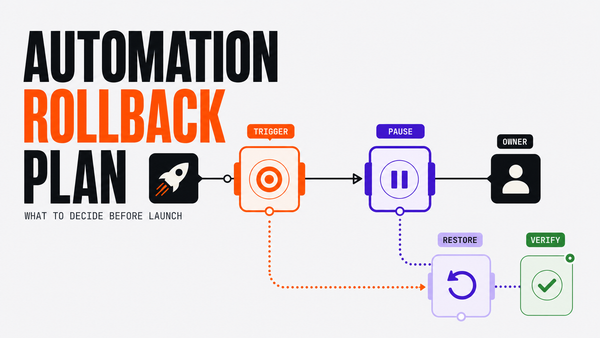
  • Rollback path

These controls are not bureaucracy. They are the reason an AI workflow can become part of normal operations. Without them, the company may still have an impressive demo, but the owner will not know what happened, why it happened, or how to reverse it when an edge case appears.

A Practical Implementation Roadmap

The best first build is usually small and strict. Start by picking one workflow that already has repeatable inputs and a clear human owner. Document the current path, including where the request starts, which systems hold the facts, who approves the output, and what happens when the workflow stalls. That map becomes the source-of-truth brief for the agent or automation layer.

Next, define the agent's permission level before connecting tools. A read-only workflow can summarize records and prepare notes. A draft-only workflow can create suggested copy, reports, or task updates. A recommend-and-route workflow can decide who should review the work next. Execute-with-approval should come later, after the business has evidence from real examples. Never-execute rules should be written down explicitly so the system cannot drift into sensitive areas by accident.

Finally, launch with a review loop instead of a "set it and forget it" mindset. The owner should review rejected drafts, missed context, failed tool calls, slow handoffs, and repeated edge cases. Those examples become the next improvement cycle. This is how a workflow moves from experiment to operating system without pretending the agent is perfect on day one.

What To Measure Before Calling It Working

Do not judge an AI workflow by whether it feels impressive in a demo. Judge it by operational evidence: how many drafts were accepted, how many were corrected, where humans still had to intervene, what exceptions repeated, and whether the team can explain why an output was produced. The goal is not blind autonomy. The goal is a workflow that becomes easier to trust because the approvals, logs, and failure modes are visible.

For a high-AOV buyer, this measurement layer is part of the product. If a vendor cannot show how quality is reviewed after launch, the business is buying implementation without operations. Omni Studio's strongest position is to make that ongoing operating layer explicit: define the workflow, instrument it, improve it, and keep risky actions reviewable.

How Omni Studio Should Be Evaluated

Omni Studio should be evaluated by its ability to turn a messy business workflow into a controlled operating lane. A strong engagement should produce a source map, permission rules, draft queues, review criteria, monitoring, and a weekly improvement rhythm. The goal is not to make the business sound more technical. The goal is to make important work move with fewer hidden handoffs.

For high-AOV buyers, the strongest buying signal is usually not interest in a chatbot. It is a workflow with enough repetition, revenue impact, or operational risk that a managed implementation is worth owning carefully. That is where a service-led AI operating partner can be more valuable than another self-serve tool.

Common Failure Modes To Avoid

The first failure mode is automating before the workflow is understood. If nobody can explain the current process, the agent will inherit the confusion. The second failure mode is connecting too many tools too early. More access can make the demo feel powerful while making the system harder to audit. The third failure mode is skipping eval examples. Without known-good and known-bad examples, the team cannot tell whether the system is improving or just producing confident output.

The fourth failure mode is treating approvals as friction instead of learning. Early approval queues reveal where instructions are vague, source data is missing, or the workflow is not ready for more autonomy. The fifth failure mode is leaving ownership unclear after launch. Someone has to review exceptions, tune instructions, monitor cost and latency, and decide which actions can move from draft-only to approval-gated execution. A managed partner should make that ownership visible from the start.

Source Notes

The recommendations above are based on the current public documentation and positioning from the relevant platform categories. Use these as source references when comparing native ecommerce AI, workflow automation, and agentic automation:

Related Omni Reading

Can home-service businesses trust AI agents with real operations?

Short answer: yes, but only when the agent is scoped around approval-gated work instead of unrestricted automation. For HVAC, plumbing, roofing, electrical, and other home-service teams, the reliable pattern is to let AI draft, route, summarize, and flag work while an owner, dispatcher, office manager, or CSR approves anything that changes the customer promise.

That means AI can help with after-hours call intake, missed-call follow-up, dispatch triage, technician scheduling notes, estimate preparation, invoice follow-up, CRM cleanup, and review replies. It should not automatically approve refunds, change pricing, promise arrival windows, send legal commitments, modify payroll, or override service-area rules without a human checkpoint.

The approval ladder we use for home-service workflows

Workflow level Home-service example Reliability gate
Read-only Read job history, customer notes, call transcripts, and CRM fields. No customer-facing action.
Draft-only Draft a customer reply, estimate note, dispatch summary, or review response. Human reviews before sending.
Approval-gated Suggest appointment changes, invoice adjustments, or technician routing. Owner, dispatcher, or office manager approves the change.
Never automatic Refunds, payroll, legal commitments, discounts, policy exceptions, or emergency promises. Human owns the decision and audit trail.

What reliability evidence should the owner monitor?

A home-service AI workflow should expose accepted drafts, rejected drafts, failed tool calls, customer escalations, exception routing, audit trail history, and rollback steps. If the dashboard cannot show what the agent did, why it suggested the action, who approved it, and how to reverse it, the workflow is not ready for live operations.

Use the AI Ops readiness scorecard to check whether a workflow is safe to launch, review the managed AI Ops model for monitoring and improvement, or start with an AI automation audit before letting an agent touch dispatch, booking, invoices, or customer communication.

FAQ

Are AI agents reliable enough for business operations?

They can be reliable for narrow, monitored workflows with clear permissions, evals, logs, and human approval gates. They are not reliable for every operation by default.

What makes an AI agent reliable?

Scope control, tested examples, tool permissions, trace logs, fallback paths, exception queues, approval levels, and a human owner for maintenance.

What should not be automated first?

Refunds, billing changes, legal language, public publishing, irreversible customer changes, and sensitive customer replies should not be uncontrolled first workflows.

OS
Omni Studio